
Serious Traumatic Injuries to Cameroonian Judoka During Competition
Muluem Olivier K1,3*, Mefo Nono Fah Annick Cindy2,3, Nyekel Justine2, Koum Njoh Hyppolite3, Tankeng Leonard T2, Ngatchou Djomo William2
1Department of Surgery and Specialties, Faculty of Medicine and Biomedical Sciences, University of Yaounde 1, Ngoa-Ekelle, Yaoundé, Cameroon
2Department of Sports Medicine, Faculty of Medicine and Pharmaceutical Sciences, University of Douala, Avenue de la Douala, B.P. 2701 Douala, Cameroon
3Medical Commission, Cameroon Judo Federation, Palais Polyvalent des Sports (PAPOSY), Yaoundé, Cameroon
*Corresponding Author: MULUEM Kennedy Olivier, Department of Surgery and Specialties, Faculty of Medicine and Biomedical Sciences, University of Yaounde 1, Ngoa-Ekelle, Yaoundé, Cameroon.
Received: 07 March 2026; Accepted: 18 March 2026; Published: 06 April 2026
Article Information
Citation: Muluem Olivier K, Mefo Nono Fah Annick Cindy, Nyekel Justine, Koum Njoh Hyppolite, Tankeng Leonard T, Ngatchou Djomo William. Serious Traumatic Injuries to Cameroonian Judoka During Competition. Journal of Orthopedics and Sports Medicine. 8 (2026): 143-147.
View / Download Pdf Share at FacebookAbstract
Introduction: Giant cell tumor of bone (GCTB) is a locally aggressive tumor with low metastatic potential. Giant cells express RANK ligand (RANKL), contributing to osteolytic destruction. Denosumab, a monoclonal antibody against RANKL, inhibits osteoclast activity.
Aims & Objectives: To evaluate the role of denosumab in GCTB management and assess its risks and benefits.
Methods: Fifteen patients (aged ≥12 years, weight ≥45 kg) with Campanacci grade 2/3 GCTB received denosumab (120 mg SC monthly for 3–4 months, with loading doses on days 8 and 15). Calcium (500 mg) and vitamin D (400 IU) were supplemented. Assessments included clinical, radiological (X-ray, CT, MRI), and biochemical (CBC, calcium, phosphate) monitoring every 4 weeks.
Results: Denosumab showed high tumor response rates, improved quality of life, reduced pain, and decreased need for extensive surgery. Toxicity was acceptable.
Conclusion: Denosumab is effective as adjunct therapy in advanced GCTB, though complications (hypocalcemia, ONJ, atypical fractures, recurrence) require monitoring.
Keywords
Judo; Serious trauma; Cervical spine; Competition; Cameroon
Article Details
1. Introduction
According to the International Judo Federation, judo is practiced by more than 20 million people in over 200 countries across five continents [1,2]. Given such a high participation rate in a combat sport and the relatively high risk of injury that comes with it [3], the safety of practitioners is a top priority. A study conducted by Kujala et al. [4] showed that judo has the second highest injury rate after karate [4]. The reported injury incidence rate per 1,000 athletes exposed (during combat) ranges from 41.2% to 81.6% [5]. The most common injuries are sprains and contusions, usually to the knee, shoulder, and fingers. The most common cause of these injuries is being thrown. Serious injuries are quite rare and are mostly dislocations, fractures, and ligament ruptures, with the most fatal ones involving the brain and spine [6,7]. Olsen et al. [8] defined serious injuries as those that require a break from competition and training for more than 21 days [8]. Treatment for these injuries varies depending on their location and severity. It may be surgical (osteosynthesis, ligament or tendon repair) or orthopedic (cast immobilization, soft support). These injuries and treatments can be detrimental to the rest of an athlete's career [6,7,9,10].
Very few studies have been reported in Africa on the practice of judo [10-12]. In Cameroon, a few studies have been conducted on injuries sustained while practicing judo, such as the study by Douryang et al. [11] conducted during the 2019 Dschang University Games, which found an incidence rate of injuries in judo of 18.4%. It ranked judo as the second sport with the highest injury rate after wrestling [11]. In 2023, Muluem et al. [10] reported on traumatic cervical spine injuries in Cameroonian judokas: four observations [10].
The objective of our study was to establish the epidemiological, clinical, therapeutic, and prognostic profile of Cameroonian judokas who suffered serious trauma during judo competitions.
2. Materials and Methods
We conducted an observational, retrospective, and prospective study at the Cameroonian Judo Federation (FECAJUDO) and at various competition venues during the study period. The study period ran from January 2020 to May 2024. The study included all judokas aged 16 or older who suffered a serious traumatic injury during a judo competition. The data collection procedure was carried out in three phases:
The first consisted of a thorough review of the federation's medical records to identify serious injuries during competitions such as: Africa Open, African Games, National Individual Championship, African Kata Championship, Cameroon Team Cup.
During the second phase, we attended national and international judo competitions that took place during the study period and recorded cases of serious injuries.
The third phase consisted of following up with these athletes to evaluate their treatment and the time it took them to return to sport.
The following variables were studied: age, gender, weight category, performance level, number of years of practice, region of the body injured, type of injury, presence of vascular and/or nerve complications, imaging tests performed, type of treatment administered, and time to return to judo.
We used the 2020 International Olympic Committee consensus statement [13] for the collection and reporting of epidemiological data. Statistical analyses were performed using SPSS version 26 software.
3. Results
Over a period of four years, we identified 21 judokas who suffered serious injuries during judo competitions. Of the 21, we found 17 in the federation's medical records and identified four judokas during the prospective phase.
3.1 Epidemiological profile
The average age was 22.14 ± 3.14 years, ranging from 16 to 28 years. There were 11 (52.4%) female judokas, with a male-to-female ratio of 0.9. The -57 kg category was the most represented with (n=5; 23.8%) judokas. Nine (42.9%) judokas were black belts, followed by (n=6; 28.6%) blue belts and (n=5; 23.8%) brown belts. In terms of performance level, (n=12; 57.1%) judokas were at international level and (n=9; 42.9%) judokas were at national level. The average length of experience in judo was 11.19 ±4.1 years, ranging from 5 to 17 years. We recorded a total of 21 serious traumatic injuries during the study period for a total of 1,980 judokas who participated in competitions, representing an incidence rate of 1.06%.
3.2 Clinical profile
3.2.1 Topography of lesions
The most commonly affected area of the body was the neck (n=5; 23.8%), followed by the shoulder (n=4; 19%), elbow (n=4; 19%), and knee (n=3; 14.3%) (Table 1).
|
Region |
Body parts |
Number (n=21) |
Percentage (%) |
|
Head and neck |
Neck |
5 |
23,8 |
|
Upper limb |
Shoulder |
4 |
19 |
|
Arm |
2 |
9,5 |
|
|
Elbow |
4 |
19 |
|
|
Lower limb |
Thigh |
1 |
4,8 |
|
Knee |
3 |
14,3 |
|
|
Ankle |
2 |
9,5 |
Table 1: Distribution of lesions according to topography.
3.2.2 Type of injury
The main injuries were dislocations and severe sprains, with (n=7; 33.3%) cases of each injury recorded, followed by fractures (n=6; 28.6%). (see Table 2). Fractures and dislocations were much more common among female judokas, while severe sprains were more common among male judokas (see Table 3).
|
Type of injury |
Number (n=21) |
Percentage (%) |
|
Dislocation |
7 |
33,3 |
|
Severe sprain |
7 |
33,3 |
|
Fractures |
6 |
28,6 |
|
Muscle strain |
1 |
4,8 |
Table 2: Distribution by type of injury.
|
Fracture |
Dislocation |
Muscle strain |
Severe sprain |
|
|
Male |
2 |
3 |
1 |
4 |
|
Female |
4 |
4 |
0 |
3 |
|
Total (n=21) |
6 |
7 |
1 |
7 |
Table 3: Distribution of types of injury by gender.
3.2.3 Nature of injuries
Among serious injuries, severe sprains involved the medial collateral ligament of the elbow (n=2; 9.5%) in the upper limb and the anterior cruciate ligament (n=2; 9.5%) of the knee and the lateral collateral ligament (n=2; 9.5%) of the ankle in the lower limb. Dislocations mainly affected the cervical spine (n=2; 9.5%) and the shoulder (n=2; 9.5%) (Table 4).
|
Region |
Body part |
Nature of the injury |
Number (n=21) |
Percentage (%) |
|
Head and neck |
Neck |
C5-C6 Dislocation |
2 |
9,5 |
|
C5 Fracture |
2 |
9,5 |
||
|
Severe sprain |
1 |
4,8 |
||
|
Upper limb |
Shoulder |
Deltoid muscle strain Clavicular fracture |
1 1 |
9,5 4,8 |
|
Dislocation |
2 |
9,5 |
||
|
Arm |
Humerus fracture |
2 |
9,5 |
|
|
Elbow |
Dislocation |
2 |
9,5 |
|
|
MCL severe sprain |
2 |
9,5 |
||
|
Lower limb |
Thigh |
Femur fracture |
1 |
4,8 |
|
Knee |
Dislocation |
1 |
4,8 |
|
|
ACL severe sprain |
2 |
9,5 |
||
|
Ankle |
LCL severe sprain |
2 |
9,5 |
LCL: Lateral Collateral Ligament; MCL: Medial Collateral Ligament; ACL: Anterior Cruciate Ligament
Table 4: Distribution of injuries according to their nature.
3.2.4 Associated injuries
Nerve injuries were those associated with serious injuries, including spinal cord compression in (n=4; 66.6%) judokas, compression of the ulnar nerve (n=1; 16.6%), and compression of the popliteal nerve (n=1; 16.6%).
3.2.5 Mechanism of injury
The mechanism of injury was indirect in 13 (61.9%) serious injuries (Figure 1).
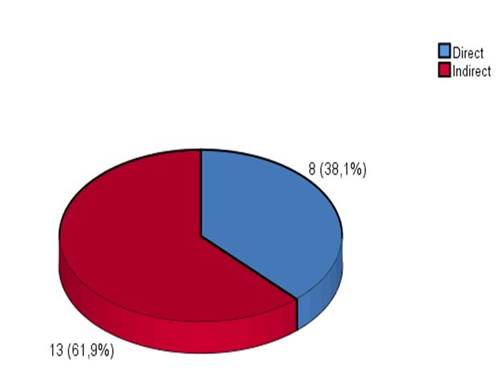
Figure 1: Distribution according to the mechanism of injury.
3.2.6 Additional tests performed
Standard X-rays were the most commonly used imaging method (n=19; 73.1%), followed by CT scans (n=4; 15.4%) and ultrasound scans (n=3; 11.5%).
3.3 Treatment profile
Time to treatment: Treatment began within one hour of the injury in all judokas who participated in our study.
Duration of treatment: The median duration of treatment was 30 [30-62.2] days, with extremes ranging from 21 to 180 days.
Treatment methods: Soft splinting was the most commonly used treatment method (n=14; 66.7%), followed by surgery (n=7; 33.3%) and plaster casts (n=2; 9.5%). All judokas received painkillers and rehabilitation sessions.
3.4 Prognosis
3.4.1 Time to return to judo
The median time to return to judo was 51 [45–90] days, counted from the day after the injury, with extremes ranging from 45 to 730 days.
Fractures in general had the longest recovery times (see Table 5).
|
Judo resumption period (%) |
||||||
|
Region |
Body part |
Nature of the injury |
Number (N=18) |
[3-6[ weeks |
[6-12[ weeks |
≥12 weeks |
|
Head and neck |
Neck |
C5-C6 Dislocation |
1 |
- |
- |
5,5 |
|
C5 Fracture |
1 |
- |
- |
5,5 |
||
|
Severe sprain |
1 |
- |
5,5 |
- |
||
|
Upper limb |
Shoulder |
Deltoid strain |
1 |
- |
5,5 |
- |
|
Clavicle fracture |
1 |
- |
- |
5,5 |
||
|
Dislocation |
2 |
11,1 |
- |
- |
||
|
Arm |
Humerus fracture |
1 |
- |
5,5 |
- |
|
|
Elbow |
Dislocation |
2 |
11,1 |
|||
|
MCL severe sprain |
2 |
5,5 |
5,5 |
|||
|
Lower limb |
Thigh |
Femur fracture |
1 |
- |
- |
5,5 |
|
Knee |
Dislocation |
1 |
- |
- |
5,5 |
|
|
ACL severe sprain |
2 |
- |
- |
11,1 |
||
|
Ankle |
LCL severe sprain |
2 |
- |
11,1 |
||
Table 5: Time to resume judo depending on the nature of the injury.
4. Discussion
Serious traumatic injuries in judokas can occur at any age. In our study, the average age was 22.14 (± 3.94) years, which is similar to the results obtained by Douryang et al. [11] and Akoto et al. [6], who reported average ages of 24 (22-25) years and 21.8 (±8.6) years, respectively, in their series. This could be explained by the fact that it is at this age that athletes train and compete intensively.
The slight predominance of female judokas (52.4%) could be explained by their low muscle mass and hormonal changes that affect physical fitness on competition day.
The most represented weight category was -57kg, similar to the results obtained by Akoto et al. [6]. This could be explained by the fact that this is the weight category with the most female participants. Most judokas (57.1%) were international level and had an average of 11.19 (±4.1) years of experience. These results differ from those found by Frey et al. [14] and Akoto et al. [6], in which the majority of injuries were found among regional-level judokas, followed by national- and international-level judokas. This could be explained by the fact that in our study we only took into account national and international competitions.
In terms of injuries, dislocations (33.3%) and severe sprains (33.3%) were the most common types of trauma, which is consistent with the literature [6,7,11,15]. The most commonly affected area of the body was the head and neck, with (n=5; 23.8%) cervical spine injuries, followed by the shoulder and elbow, which each had (n=4; 19%) injuries. These results are similar to those found by Pocceco et al. [7]. Indeed, the cervical spine is a highly stressed area in judo practice during landing techniques, while the upper limbs are used more during grabs and attack techniques. However, our results differ from those found by Akoto et al. [6], in whose study the most affected body region in cases of serious trauma was the knee, followed by the shoulder. In the series by Wieslaw et al. [15], the shoulder was the area most affected by serious trauma, followed by the elbow. This difference could be explained by the fact that their study was conducted on a larger population of judokas, including all performance levels, and over a long period (15 years). Nerve injuries were the only associated injuries in our series, dominated by spinal cord compression (66.6%). This could be explained by the fact that the most affected area of the body in our study was the cervical spine. The Haraï goshi, Tomoe nage, and Uchi mata techniques were the most common causes of cervical spine injuries. Results similar to those found by Muluem et al. [10] and Kamitani et al. [16], which could be explained by the fact that these are throwing techniques, where the landing on the ground can be on the head or neck.
Coverage of judo competitions by competent and well-equipped medical staff is essential, as this reduces treatment delays and improves treatment duration, as we highlighted in our study. The majority of injuries were treated with soft splints, which shows the importance of conservative treatment even for experienced judokas. The fact that all the judokas in our series benefited from rehabilitation sessions was an important factor that enabled a rapid return to judo with a median delay of 51 [45-90] days. Elbow dislocations had the shortest recovery times compared to other injuries, which is consistent with the results reported by Akoto et al. [6]. This could be explained by the fact that the elbow joint is not a weight-bearing joint and the two joint surfaces fit together perfectly even after reduction. In our series, spinal injuries had the longest recovery times for judo because most were dislocations and fractures of the cervical spine, which take a long time to heal. Akoto et al. [6] had different results because their series included more anterior cruciate ligament injuries.
It should be noted, however, that three judokas did not resume judo: one had a humeral shaft fracture that was slow to heal because he had removed his cast without the medical team's knowledge. One had a femur fracture and another had a C5-C6 dislocation with spinal cord compression; both stopped judo permanently. We noted one death in this series, which occurred in hospital, of an athlete who had a fracture-dislocation of the C5 vertebra with spinal cord compression. This death was thought to be due to respiratory failure caused by spinal cord compression at the C5 level.
5. Conclusion
Serious traumatic injuries among Cameroonian judokas are relatively rare. The nature of the injuries varies, with the most common being dislocations and severe sprains of the cervical spine and upper limbs. The most affected area of the body was the neck, more specifically the cervical spine, which was accompanied by nerve damage in the form of spinal cord compression. Conservative treatment was used as a first-line approach, with surgery reserved for cases where it was absolutely necessary. The athletes were able to resume judo fairly quickly, aided by early rehabilitation tailored to the care they received. The specific nature of serious traumatic injuries in judo involving the cervical region, requires that the medical kit for competitions be appropriately equipped, and that officials and athletes must be trained in the recognition and transport of spinal trauma patients.
Conflict of interest:
none
Contributions of authors:
MOK: conception of study, manuscript correction, MNF: data collection, manuscript editing NJR: proofreading, KNH: data colletion, TL: translator, NW: supervisor.
References
- Murata N. From Jutsu to Do: the birth of Kodokan Judo. In Bennett A, ed. Budo Perspectives 2005: 141-154.
- International Judo Federation. http://www.ijf.org (accessed 30 March 2024).
- Kobayashi H, Kanamura T, Koshida S, et al. Mechanisms of the anterior cruciate ligament injury in sports activities: a twenty-year clinical research of 1700 athletes. J Sports Sci Med 9 (2010): 669-675.
- Kujala UM, Taimela S, Antti-Poika, et al. Acute injuries in soccer, ice hockey, volleyball, basketball, judo and karate: analysis of national registry data. BMJ 311 (1995): 1465-1468.
- Jeroen M, Amber L, Irene T, et al. Epidemiology of injuries during Judo tournaments: a systematic review. Translational Sports Medicine (2023): 1-14.
- Akoto R, Lambert C, Balke M, et al. Epidemiology of injuries: a cross-sectional survey of severe injuries based on time loss and reduction in sporting level. Br J Sports Med 0 (2017): 1-8.
- Pocecco E, Ruedl G, Stankovic N, et al. Injuries in Judo: a systematic review including suggestions for prevention. Br J Sports Med 47 (2013): 1139-1143.
- Olsen OE, Myklebust G, Engebretsen L, et al. Injury pattern in youth team handball: a comparison of two prospective registration methods. Scand J Med Sci Sports 16 (2006): 426-432.
- Green CM, Petrou MJ, Forgaty-Hover ML, et al. Injuries among judokas during competition. Scand J Med Sci Sports 17 (200 7): 205-210.
- Muluem OK, Tsiagadigui JG, Fonkoue L, et al. Cervical spine trauma in Cameroonian Judokas: risk factors and prognosis in three cases in Yaounde. Back Bone: The Spine Journal 4 (2023): 24-27.
- Douryang M, Giordani L, Sanou M, et al. The 2019 Cameroon University Games: prevention strategies for musculoskeletal injuries. Muscles, Ligaments and Tendons Journal 11 (2021): 475-483.
- Phillips JS, Frantz JM, Amosun SL, et al. Injury surveillance in Taekwondo and Judo during physiotherapy coverage of the seventh All Africa Games. SA Journal of Physiotherapy 57 (2001): 1-3.
- Bahr R, Clarsen B, Derman W, et al. International Olympic Committee consensus statement: methods for recording and reporting of epidemiological data on injury and illness in sport 2020 (including STROBE Extension for Sport Injury and Illness Surveillance (STROBE-SIIS)). Br J Sports Med 0 (2020): 1-18.
- Frey A, Lambert C, Vesselle B, et al. Epidemiology of judo-related injuries in 21 seasons of competition in France. The Orthopedic Journal of Sports Medicine (2019): 1-8.
- Wieslaw B, Peter S, Lukasz R, et al. Judo injuries frequency in Europe’s top-level competitions in the period 2005-2020. J Clin Med 10 (2021): 1-8.
- Kamitani T, Nimura Y, Nagashiro S, et al. Catastrophic head and neck injuries in judo players in Japan from 2003 to 2010. Am J Sports Med 41 (2013): 1915-1921.

 Impact Factor:
* 5.3
Impact Factor:
* 5.3
 Acceptance Rate:
73.64%
Acceptance Rate:
73.64%
 Time to first decision: 10.4 days
 Time from article received to acceptance:
2-3 weeks
Time from article received to acceptance:
2-3 weeks
